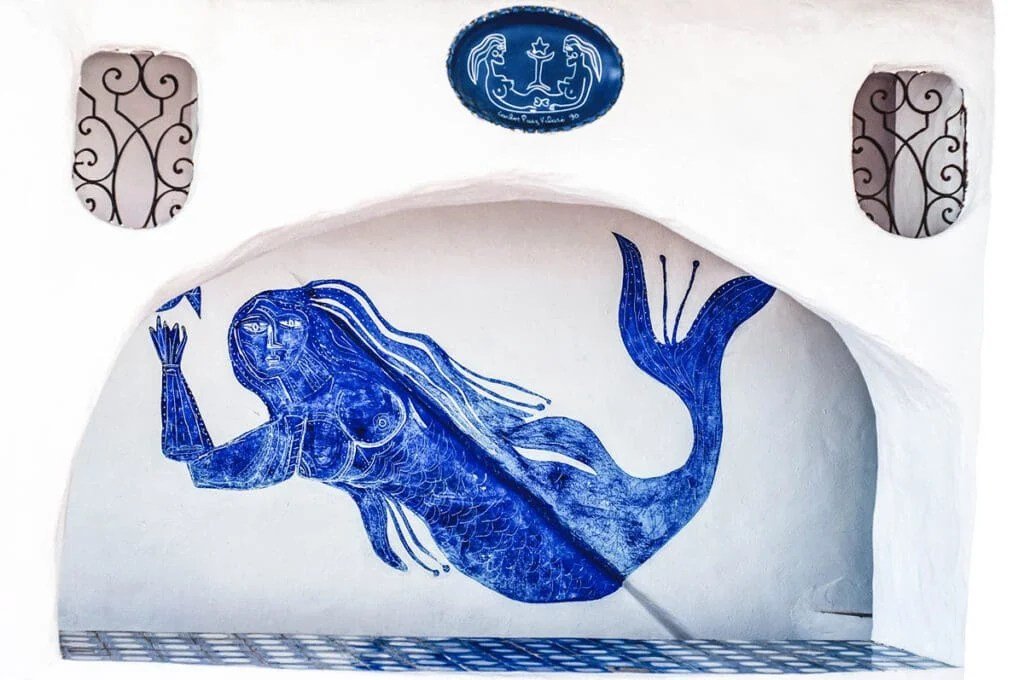
Step into the shimmering, often treacherous, waters of ancient myth, and you'll quickly encounter the captivating figures of mermaids and sirens. These enigmatic creatures, with their human allure and aquatic mystery, have profoundly shaped our collective imagination, their stories flowing through the Folklore Roots & Mythology of Mermaids and Sirens for millennia. Far from simple fairy tales, their legends tap into our deepest fears of the unknown, our fascination with the ocean's depths, and the eternal struggle against temptation.
But who are these alluring figures, really? And how did their ancient origins evolve into the enchanting—and sometimes terrifying—visions we recognize today? Let's dive in.
At a Glance: Unraveling Mermaid and Siren Lore
- Distinct Origins: While often conflated, Mermaids and Sirens began as separate mythological beings.
- Siren's Evolution: Ancient Greek Sirens were initially dangerous bird-women, not fish-tailed.
- The Shift: Greek art and later Christian bestiaries gradually transformed Sirens into fish-tailed women.
- Mermaid's True Roots: The oldest known mermaid story comes from Assyria (around 1000 BC) featuring the goddess Atargatis.
- Perilous Allure: Both creatures symbolize temptation, danger, and the untamed power of the sea.
- Enduring Legacy: Their myths continue to inspire and resonate in modern culture, from literature to film.
From Deadly Birds to Enchanting Fish: Unpacking the Siren's Transformation
When you picture a "siren" today, you likely imagine a stunning woman with a fish tail, singing a hypnotic song from a rocky outcrop. Yet, for much of antiquity, that image would have been utterly unrecognizable to the Greeks who birthed the myth. Understanding the true folklore roots of sirens means venturing back to a time when feathers, not fins, defined these deadly temptresses.
The Original Siren: A Creature of Air and Song
In the annals of ancient Greek mythology, Sirens were never initially depicted with fish tails. Instead, these were terrifying beings, half-woman and half-bird, renowned for their breathtakingly beautiful voices. Perched on treacherous rocky crags along the sea, their sole purpose was to lure unsuspecting sailors to their doom. Their enchanting songs promised knowledge, pleasure, or reprieve, but delivered only shipwreck and death.
Homer's epic poem, The Odyssey, offers one of the most vivid and foundational accounts of these perilous creatures. The sorceress Circe famously warns Odysseus about the Sirens, detailing their irresistible song and the piles of bones left behind by their victims. Odysseus, a hero known for his cunning, devises a brilliant plan: he has his crew plug their ears with beeswax and then tie him firmly to the ship's mast, forbidding them from untying him, no matter how much he pleaded. Upon hearing their divine music, Odysseus was overwhelmed, begging to be freed, yet his loyal crew obeyed Circe's instructions, ensuring their safe passage.
Interestingly, some ancient authors believed that the Sirens were fated to die if anyone ever heard their song and successfully resisted their lure. Thus, Odysseus is often credited with effectively "killing" them, as they, in their despair, supposedly jumped into the sea to their deaths after his escape. Hesiod's Theogony even names them as daughters of the river god Achelous, further grounding their myth in the Greek pantheon. Symbolically, these bird-women embodied the ultimate perils of temptation, the alluring unknown, and the destructive power of irresistible desire.
The Hellenistic Shift: Feathers Give Way to Fins
So, how did the bird-like Siren become the fish-tailed icon we recognize? This transformation wasn't sudden but a gradual evolution in imagery, influenced by cultural exchange and artistic interpretation.
By the Hellenistic period (roughly 323–31 BC), Greek art began to show a significant departure from the traditional avian Siren. While bird-like forms certainly persisted, especially in some Byzantine art centuries later, an increasing number of depictions started portraying Sirens as beautiful, fish-tailed women. This new visual blended the seductive upper body of a woman with the shimmering, serpentine tail of a fish, establishing a powerful new archetype.
Medieval Christian bestiaries, influential texts that described real and mythical animals (often with moralizing allegories), further cemented this visual shift in European folklore. These bestiaries frequently depicted Sirens with fish tails, borrowing heavily from the newly evolved Greek imagery. This change was crucial, as many of the Sirens' original qualities – their seductive songs, their dangerous allure, their role in leading sailors to their deaths – transferred almost seamlessly to this new, aquatic form, laying the groundwork for what we now understand as the European mermaid.
The True Mermaid's Deep Roots: From Assyria to the Aegean
While the Siren was undergoing its remarkable transformation, the concept of a fish-tailed human-hybrid had already existed for centuries in other cultures. The oldest known stories featuring creatures that closely resemble our modern mermaids predate the Hellenistic Siren by a significant margin, tracing back to the ancient Near East.
Atargatis: The Mother of Mermaids
Around 1000 BC, in the ancient kingdom of Assyria, tales circulated of the goddess Atargatis. Her story is often considered the earliest origin point for the mermaid figure. The legend tells of Atargatis, a goddess of fertility and water, who fell deeply in love with a mortal shepherd. In a tragic accident, she caused his death. Overcome with shame and grief, Atargatis cast herself into a lake, intending to take the form of a fish. However, her divine beauty was so immense that the gods could not allow her upper body to be completely transformed. Thus, she retained her human form from the waist up, while her lower half became that of a fish. This poignant myth even led to a regional stigma against eating fish, out of respect for the goddess.
The Greeks, who knew Atargatis as Derketo, were familiar with her story. It's highly probable that this ancient Mesopotamian legend played a significant role in influencing later Greek depictions of Sirens as fish-tailed beings, providing a parallel, pre-existing concept of an aquatic human-hybrid.
Roman Records and Royal Legends
The allure of mermaids wasn't confined to myth; sometimes, people believed they saw them. The renowned Roman historian Pliny the Elder, writing in the 1st century AD, famously reported numerous mermaid sightings along the coast of Gaul (modern-day France). He even claimed that the local governor informed Emperor Augustus of scaled mermaid bodies washing ashore. Whether these were misidentified marine animals or genuine belief, Pliny's accounts highlight the strong presence of mermaid lore in the Roman consciousness.
Centuries later, a fascinating legend emerged in Ottoman Greece, blending historical figures with mythical transformation. This tale speaks of Thessaloniki, the sister of Alexander the Great. Upon her death, she was reportedly transformed into a mermaid, destined to live in the Aegean Sea. According to the legend, she would approach passing ships and ask a single, haunting question: “Is King Alexander alive?” (“Ζει ο Βασιλεύς Αλέξανδρος?”). The correct, placating answer – “He lives and reigns and conquers the world” (“Ζει και βασιλεύει και τον κόσμον κυριεύει”) – would calm the waters and ensure safe passage. Any other answer, however, would enrage her, summoning a furious storm that would inevitably shipwreck the vessel. This story beautifully illustrates how historical figures can become woven into the fabric of Folklore Roots & Mythology of Mermaids and Sirens, merging human memory with mythical belief.
Separating Scales from Feathers: Mermaid vs. Siren, Clearly Defined
Given the intertwining evolution of their imagery, it's no wonder that mermaids and sirens are often used interchangeably. However, from a mythological perspective, they have distinct origins and generally different characteristics. Understanding this distinction is key to appreciating their individual contributions to folklore.
Sirens: The Greek Temptresses
- Origin: Strictly rooted in ancient Greek mythology.
- Original Form: Initially depicted as dangerous bird-women (half-woman, half-bird).
- Later Form: Evolved in Hellenistic and Byzantine art to sometimes include fish tails, influenced by other aquatic myths.
- Nature: Almost exclusively malevolent. Their primary purpose was to lure sailors to their deaths with irresistible songs, symbolizing temptation, peril, and destruction. They are creatures of warning.
- Examples: The Sirens encountered by Odysseus in The Odyssey.
Mermaids: The Global Water Dwellers
- Origin: Found in the folklore of many diverse cultures worldwide, with the oldest known story stemming from Assyria (Atargatis).
- Form: Consistently depicted with the head and upper body of a woman and the lower body of a fish.
- Nature: More varied than Sirens. While some mermaid tales feature dangerous or tragic figures (like the Thessaloniki legend), many portray them as benign, playful, curious, or even benevolent beings who sometimes assist humans or sailors. Their symbolism is broader, encompassing fertility, mystery, and the connection between humanity and the sea.
- Examples: Atargatis, numerous Celtic and Norse legends, and indeed, many modern interpretations.
The critical takeaway is that while the imagery of a fish-tailed woman was adopted by later depictions of Sirens, the mermaid's roots are far more widespread and often predate the aquatic Siren. The dangerous, seductive qualities of the Greek Siren, however, certainly influenced the darker aspects of European mermaid folklore, creating mermaids who also used songs to lead sailors astray. To truly Explore the Little Mermaids journey, for instance, you'd be looking at a creature with firmly mermaid, not Siren, characteristics.
Misconceptions, Modern Interpretations, and Enduring Allure
The ocean has always been a place of both wonder and terror for humanity. For sailors venturing into its vast, unpredictable expanse, mythical creatures like mermaids and sirens became potent embodiments of their deepest fears and wildest imaginations.
The Manatee Mistake: When Myth Meets Reality
One of the most famous examples of myth potentially merging with reality comes from the explorations of Christopher Columbus. He famously claimed to have seen mermaids in the Caribbean, describing them as "not half as beautiful as they are painted." Today, contemporary experts widely believe that Columbus and his crew likely encountered manatees or similar aquatic mammals like seals. From a distance, in the early days of exploration and fueled by folklore, it's easy to see how these creatures might have been misinterpreted, offering a tangible "sighting" that further solidified the mermaid myth. This underscores how deeply the belief in these creatures permeated the consciousness of the era.
The Siren's Resurgence: From Ancient Greece to Pop Culture
Despite their ancient origins, the allure of Sirens and mermaids has never truly faded. In fact, the imagery of Sirens, in particular, continues to experience a powerful resurgence in contemporary media. From blockbuster films like "Pirates of the Caribbean: On Stranger Tides," which features seductive and dangerous Sirens, to popular young adult novels such as Kiera Cass's "The Siren," these myths are constantly reinterpreted for modern audiences.
This enduring appeal stems from their potent metaphorical power. The Siren myth, in particular, speaks to universal human desires and fears:
- Temptation: The irresistible pull towards something dangerous but desirable.
- The Unknown: The mysteries of the deep, and by extension, the mysteries within ourselves.
- Human Frailty: How easily we can be swayed by beauty, promises, or powerful emotions.
- Feminine Power: The captivating, often dangerous, strength attributed to female figures in folklore.
Whether depicted as outright malevolent or merely misunderstood, the Folklore Roots & Mythology of Mermaids and Sirens continues to resonate because they embody facets of the human experience that are timeless. They remind us of the beauty and peril of the world, and the eternal struggle between rationality and irresistible desire.
Beyond the Waves: What These Myths Still Teach Us
The tales of mermaids and sirens are far more than just ancient fables; they are vibrant echoes from our past that continue to shape our present. They show us how different cultures grappled with the mysteries of the ocean, projected their hopes and fears onto the natural world, and crafted narratives to explain the inexplicable.
These figures serve as powerful reminders of humanity's long-standing relationship with the sea—a relationship marked by both profound respect and deep-seated terror. They invite us to ponder the depths of our own desires and the seductive power of the unknown. As storytellers continue to reinterpret these ancient figures, they ensure that the captivating allure of the mermaid and the dangerous song of the siren will continue to ripple through our imaginations for generations to come, beckoning us to explore the deeper currents of folklore and myth.